Celebrating Earth Day, Standing Beside Life
There is much to celebrate on Earth Day! We are especially excited to share developments in the Rights of Nature movement. Perhaps in particular, the recent news that in Panama, the Ministry of Environment formalised a strategic alliance with the For Nature Foundation to advance a Universal Declaration of the Rights of Nature at the […]
There is much to celebrate on Earth Day!
We are especially excited to share developments in the Rights of Nature movement. Perhaps in particular, the recent news that in Panama, the Ministry of Environment formalised a strategic alliance with the For Nature Foundation to advance a Universal Declaration of the Rights of Nature at the UN General Assembly. That is a really significant step. It brings Rights of Nature more clearly into international diplomacy, building on Panama’s 2022 Law 287, which recognised nature as a subject of rights in national law. Panama is now trying to carry that principle onto the global stage.
There have been other similarly encouraging developments in the first quarter of this year. In France, a bill was deposited in the Senate on 20 February, proposing legal personality and rights for the Seine. In England, local authorities are continuing to test what Rights of Rivers might mean in practice. East Devon publicly pledged in early March to recognise and protect the rights of rivers, and Basingstoke and Deane adopted a Declaration on the Rights of Rivers shortly afterwards. By the end of March, the House of Commons Library had published a dedicated briefing on the Rights of Rivers, a sign that these ideas are beginning to enter mainstream legal and policy discussions in the UK.
While these developments do not by themselves transform our relationship with the living world, they do matter. They suggest a shift in legal and political imagination; an increasing willingness to recognise that rivers, forests, wetlands and other living systems as communities of life with their own integrity, needs and claims.
That wider shift felt close to home for us this past weekend in Oxford.
We held an Interspecies Assembly, bringing together a diverse group of 30 people from the wider Oxford community to speak for and with a remarkable range of beings and natural entities: otters, soil, the River Thames, bear, badger, fox, water violet, hazel dormouse and more. With the amazing Gabriel Moletta running being-embodiment workshop as part of the day, and John-Paul helping people craft stunning masks, it was playful as well as thoughtful and moving. What emerged was a simple but powerful reminder that when people are invited to attend carefully to other lives, the world begins to appear differently. It becomes more animate, more relational, and more deserving of care.
The weekend also marked the closing of our We Stand Beside – The Ark exhibition in the Scottish Highlands, created by co-Founder Jane Frere (more about which soon). The two-week event closed with music from the wonderful folk band, SaltHouse, celebrating the being they stand beside — the Clifden Nonpareil (Catocala fraxini) — felt especially apt. This extraordinary moth, with its ash-grey camouflage and sudden flash of blue, captures something of what this work is about: the beauty of lives easily overlooked, and the invitation to notice them more closely.
This, in many ways, is the work of I Stand Beside.
We begin with one being because care tends to deepen when it has somewhere to land: a face, a name, a habitat, a story. From that starting point, we believe that learning can grow into affection, and affection into action. Today, 205 people are standing beside beings and natural entities through this growing community. Each one represents a small but meaningful commitment to relationship, attention and advocacy.
At a time when ecological breakdown can feel overwhelming, that matters. Laws and declarations are important. So are culture, imagination and belonging. If Rights of Nature is to mean anything in practice, it will need both institutional change and a deeper transformation in how people understand their place within the web of life.
That is why Panama’s leadership is so heartening. It is also why small gatherings, local assemblies, exhibitions, songs and acts of witness matter too. They help create the cultural conditions in which another way of living becomes imaginable.
On this Earth Day, that feels worth celebrating.
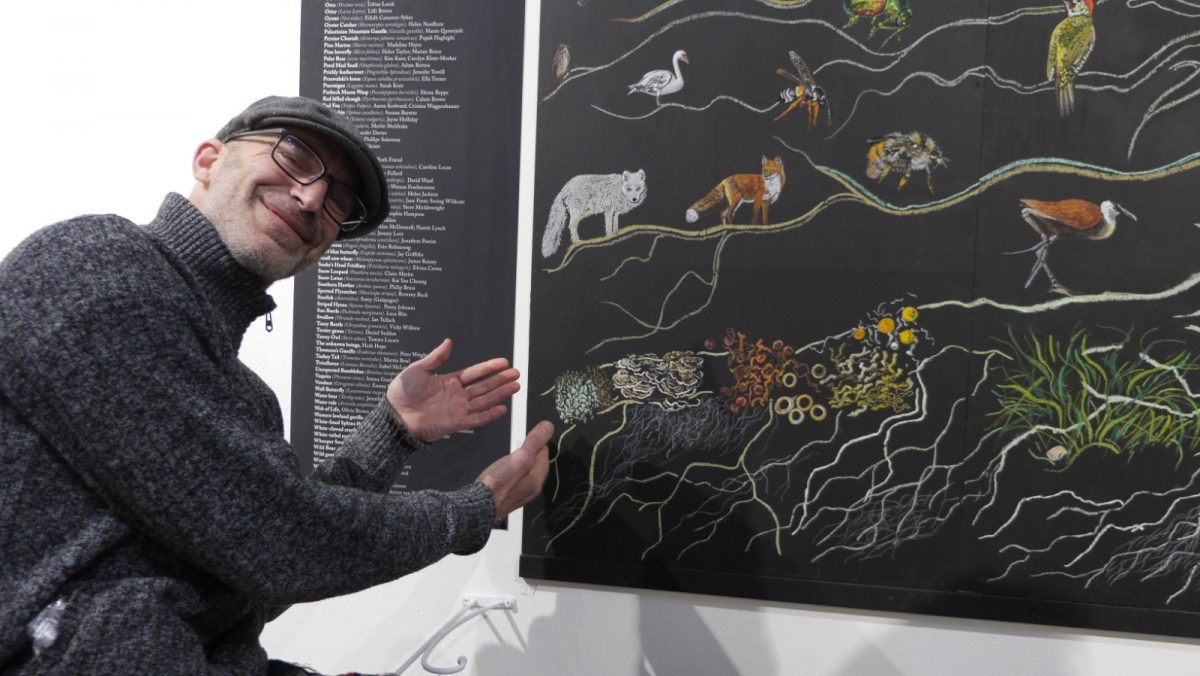
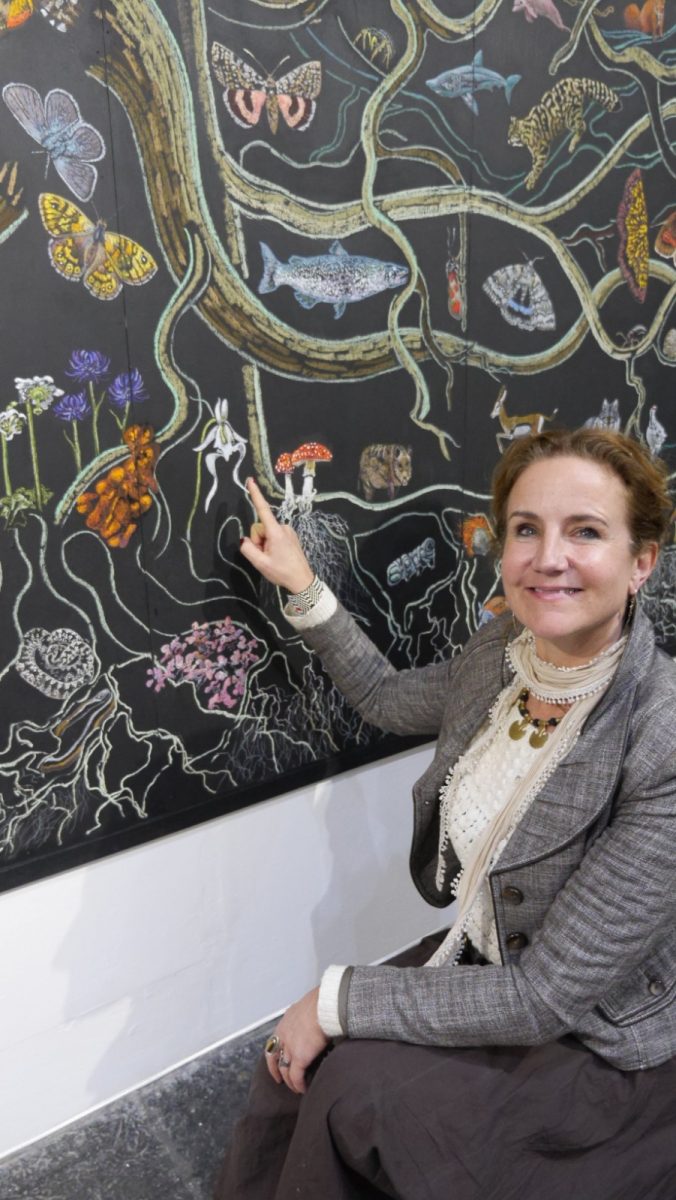
Top: John-Paul pointing out the lichens he is standing beside on Jane’s extraordinary Tree of Life at the We Stand Beside – The Ark exhibition; Bottom: Nat pointing out the ghost orcid.