Introducing the Yokozuna slickhead, and Good News from Papua New Guinea
We’ve only just learned about this colossal deep-sea fish, dark-bodied and blue-eyed, that grows up to 2.6m and weighs up to 25 kilos! First formally described in 2021 from the deep waters of Suruga Bay, Japan, the Yokozuna slickhead (Narcetes shonanmaruae) is the largest deep-sea-endemic bony fish yet documented. Recent surveys have now recorded this […]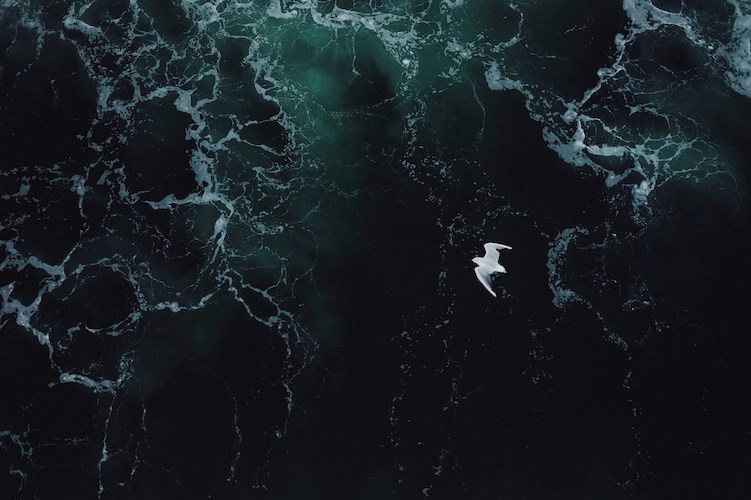
We’ve only just learned about this colossal deep-sea fish, dark-bodied and blue-eyed, that grows up to 2.6m and weighs up to 25 kilos! First formally described in 2021 from the deep waters of Suruga Bay, Japan, the Yokozuna slickhead (Narcetes shonanmaruae) is the largest deep-sea-endemic bony fish yet documented. Recent surveys have now recorded this extraordinary being in Papua New Guinea’s waters for the first time.
And that is part of what makes Papua New Guinea’s latest ocean announcement so exciting.
The country announced last week at the Melanesian Ocean Summit in Port Moresby, its plans for the largest marine protected area in its history: the Western Manus Marine Protected Area. This will be a vast no-take sanctuary in the Bismarck Sea covering roughly 200,000 square kms, i.e. nearly the size of the United Kingdom! Once legally designated, it will prohibit fishing and other destructive activities across one of the most biologically rich and least explored marine regions on Earth. It forms part of the emerging Melanesian Ocean Corridor of Reserves, a regional conservation network spanning Papua New Guinea, Fiji and Vanuatu, and is a major step towards Papua New Guinea’s commitment to protect 30% of its waters by 2030 as a signatory to the UN Global Biodiversity Framework.
The region sits within the Coral Triangle, the global epicentre of marine biodiversity. Surveys in Papua New Guinea have documented more than 700 reef fish taxa and over 300 species of hard coral, alongside remarkable deep-sea biodiversity that scientists are only beginning to understand. The Western Manus region itself has been described as a “marine highway”: a connected system of coral reefs, underwater mountains, ridges, canyons, deep-sea habitats and open ocean waters.
That connectivity matters. Grey reef sharks move between shallow reefs and deep-sea habitats and seabirds can travel more than 200 nautical miles from nesting sites in search of food. Whales, dolphins, sharks, rays, turtles and deep-sea creatures move through layered worlds of current, depth, prey and refuge. Among the beings expected to benefit from the new sanctuary are grey reef sharks, scalloped hammerheads, silky sharks, blacktip sharks, manta rays, green turtles, spinner dolphins, bottlenose dolphins, pilot whales, Cuvier’s beaked whales, killer whales, seabirds, hairy nautilus, gulper sharks, and deep-sea species such as the Yokozuna slickhead. We love them all! The announcement followed a major 2024 expedition by National Geographic Pristine Seas, working with Papua New Guinea’s Conservation and Environment Protection Authority and the Wildlife Conservation Society, which found healthy coral reefs and large schools of fish, as well as warning signs including low shark numbers, indicating pressure from overfishing.
There is also a wonderful scientific story here. Some of the discoveries emerging from modern ocean exploration are being made possible through environmental DNA, or eDNA. Every animal living in the ocean leaves traces of itself behind: cells, mucus, skin, scales, waste. A single water sample can now be filtered and analysed for these genetic traces, helping scientists detect which species are present in a place, including species that are rare, elusive, deep-living or difficult to observe directly. It feels almost like science fiction, but it is rapidly becoming part of how we learn to see the unseen.
For I Stand Beside, this news lands as a beautiful example of what protection can mean when it is grounded in both science and community. Papua New Guinea’s leaders have framed the Western Manus sanctuary not only as biodiversity protection, but as a way of safeguarding food security, livelihoods and cultural identity. One official described the sea as part of the country’s “blue heritage”: a legacy to be guarded for future generations.
That framing is important. Large, well-managed marine protected areas can allow ecosystems to recover, supporting the abundance and resilience of fish populations. Research from comparable large-scale MPAs in the Pacific and Indian Oceans suggests that tuna catch rates can increase near protected-area boundaries when no-take zones are enforced, as healthier populations spill over into surrounding waters where fishing remains allowed. In other words, protecting marine life can also support the human communities whose futures are tied to the sea.
This is good news at a time when the ocean needs it. Coral reefs are under pressure from warming waters, acidification, overfishing and pollution. Deep-sea ecosystems remain poorly understood, even as interest in exploiting the deep ocean grows. Many species may be living in these waters without ever having been named by science. The Western Manus Marine Protected Area is a decision to protect before everything is fully known and to recognise that reefs, sharks, whales, seabirds, deep-sea fishes and coastal communities belong to one connected ocean story.
The Yokozuna slickhead is only one being among many. But perhaps it can serve as a messenger from the deep: a reminder that Earth is still full of lives beyond our imagination!
Who will stand beside the deep-sea creatures, discovered and yet to be discovered?
Sources and further reading
Papua New Guinea announces largest MPA in its history — Oceanographic
Papua New Guinea plans vast marine sanctuary along Pacific “marine highway” — DIVE Magazine
Predator of the Deep: the Yokozuna Slickhead — Oceanbites
Tracking Down Ocean Species on the Go Using eDNA — Smithsonian Ocean
Environmental DNA — NOAA Ocean Exploration
Fujiwara Y, Tsuchida S, Kawato M, Masuda K, Sakaguchi SO, Sado T, Miya M and Yoshida T (2022) Detection of the Largest Deep-Sea-Endemic Teleost Fish at Depths of Over 2,000 m Through a Combination of eDNA Metabarcoding and Baited Camera Observations. Front. Mar. Sci. 9:945758. doi: 10.3389/fmars.2022.945758
Photo by Thanos Pal on Unsplash