A planet of insects we have barely begun to know
A new study in Proceedings of the National Academy of Sciences, published today, has offered one of those scientific findings that changes the scale of your imagination. For around 40 years, many scientists have worked with an estimate of about six million insect species on Earth. This new analysis suggests the true number may be […]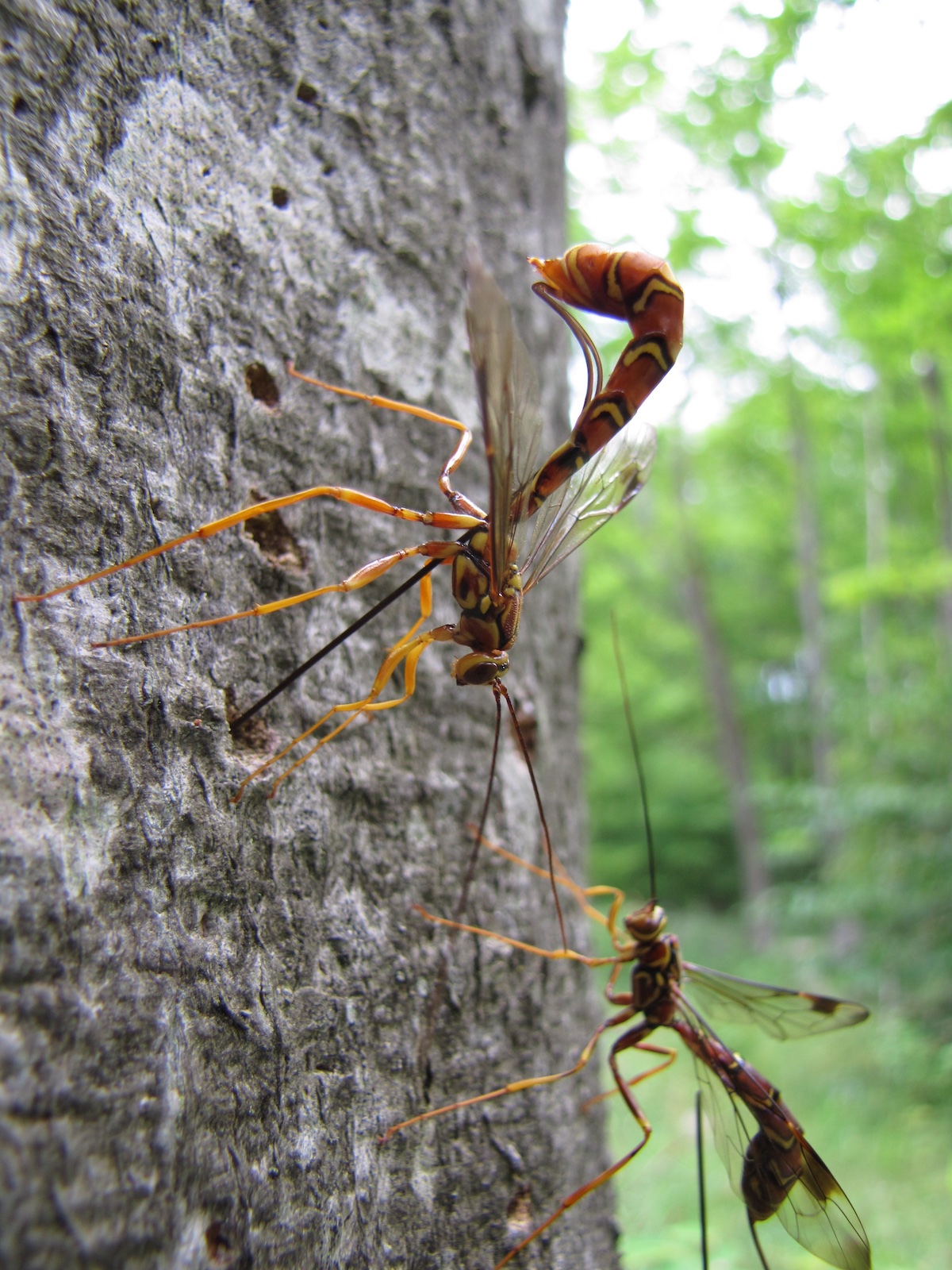
A new study in Proceedings of the National Academy of Sciences, published today, has offered one of those scientific findings that changes the scale of your imagination.
For around 40 years, many scientists have worked with an estimate of about six million insect species on Earth. This new analysis suggests the true number may be far higher: somewhere between 14 and 20 million species. In other words, there may be 8 to 14 million more insect species than previously thought.
What an extraordinary reminder that Earth is still full of lives we have not noticed or understood!
The study drew on an impressive empirical foundation: more than 1.6 million DNA-barcoded insect specimens from Costa Rica’s Área de Conservación Guanacaste, one of the world’s best-studied tropical protected areas. From just 15 core Malaise traps — tent-like traps used to sample flying insects — researchers identified nearly 54,000 insect species. They then used a detailed census of Microgastrinae, a highly diverse group of tiny parasitoid wasps, together with statistical modelling, to estimate how many species had still been missed.
The result is truly astonishing, which is why we are compelled to share it here! Even in a place that has been studied intensively for decades, the living world keeps exceeding our categories.
Many of these insects are likely to be small, rare and highly specialised. Some may live in narrow niches, appear only seasonally, depend on particular host species, or occupy parts of the forest that even careful sampling barely reaches. The study’s wider implication is profound: the most diverse animal group on Earth may be far more diverse than we realised.
For I Stand Beside, this lands with both awe and urgency. Awe, because insects are pollinators, decomposers, predators, prey, soil-makers, seed-dispersers, recyclers, ecosystem engineers and participants in food webs of extraordinary complexity. They are part of the hidden architecture of the living world. Urgency, because many insect populations are already under pressure from habitat loss, pesticides, climate change, artificial light, pollution and other forms of ecological disruption. If millions of insect species remain undescribed, then some will very likely be declining before they have ever been given a scientific name.
There is something humbling in this too. As we’ve said previously, a species does not begin to matter when humans classify it. It has been living its own life all along, shaping worlds at scales we rarely perceive. Science helps bring these beings into shared human knowledge. The important question is then what we do with that knowledge?
This study reminds us that the living world is still vaster, stranger and more intricate than we can imagine. It reminds us that we need to stand beside not only the charismatic and familiar, but also the minute, overlooked and unnamed.
Who will stand beside the insects we have not yet met?
Source:
R.K. Colwell, L.M. Guzman, D. Steinke, A. Chao, D.H. Janzen, W. Hallwachs, A. Baker, J.L. Fernández-Triana, P.D.N. Hebert, F. Joyce, R. Puschendorf, D.L.J. Quicke, R. Rougerie, M.A. Smith, N. Zamora, & M.J. Sharkey, Constructing a lower-bound estimate of the global number of insect species on a hyperdiverse empirical foundation, Proc. Natl. Acad. Sci. U.S.A. 123 (27) e2524283123, https://doi.org/10.1073/pnas.2524283123.