COP17: Indigenous Peoples gain firmer standing in the biodiversity convention
At the UN biodiversity conference in Yerevan, governments agreed how the Convention’s new body for Indigenous Peoples and local communities will work, and adopted guidelines on recognising their territories. The UN biodiversity conference, COP17, met in Yerevan, Armenia, from 19 to 31 October 2026, at the midpoint of the Kunming-Montreal Global Biodiversity Framework. Its main […]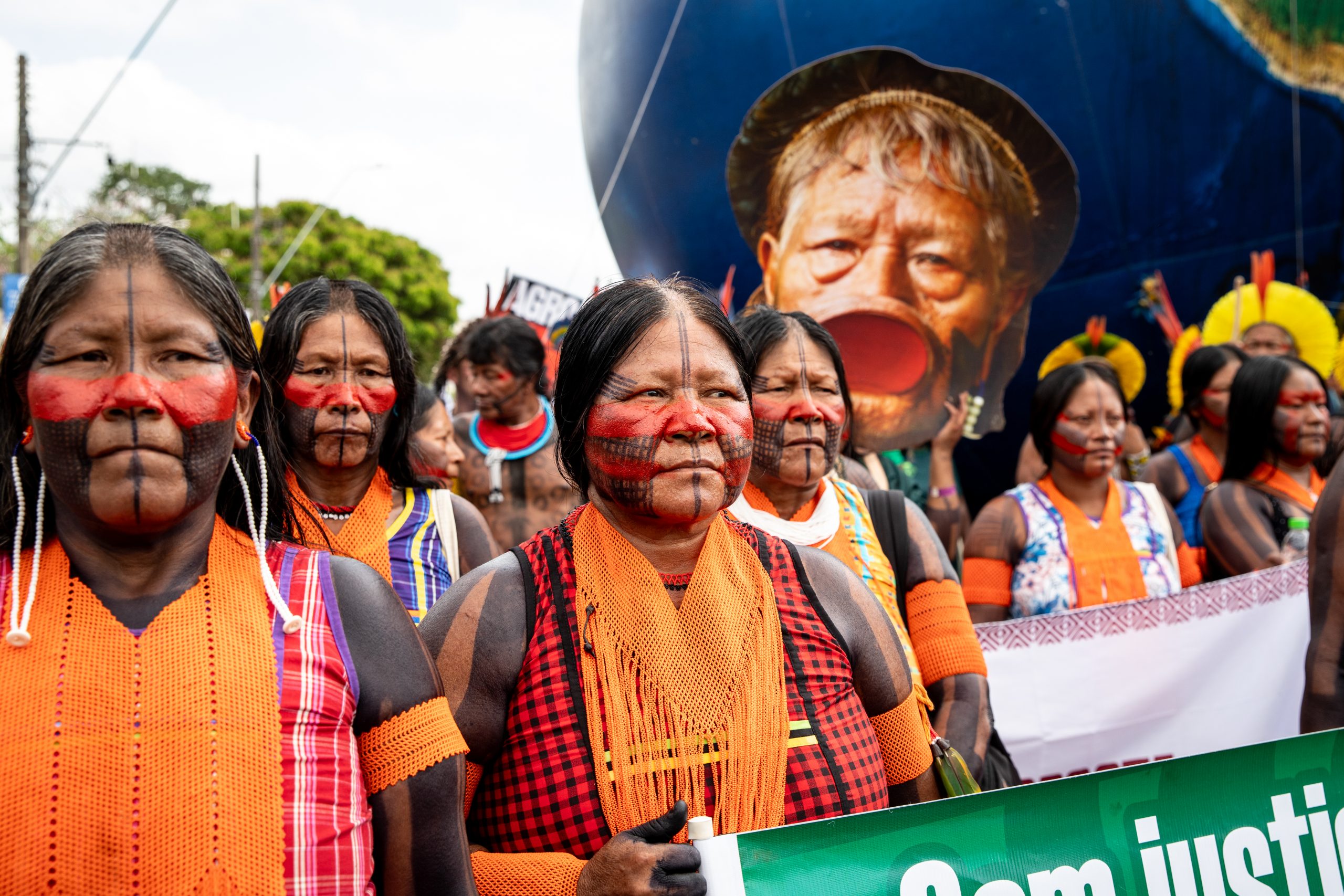
At the UN biodiversity conference in Yerevan, governments agreed how the Convention’s new body for Indigenous Peoples and local communities will work, and adopted guidelines on recognising their territories.
The UN biodiversity conference, COP17, met in Yerevan, Armenia, from 19 to 31 October 2026, at the midpoint of the Kunming-Montreal Global Biodiversity Framework. Its main task was the first global review of progress towards the framework’s 23 targets for 2030. The evidence was sobering. The Convention’s Global Report, published in September, found the world behind on 22 of the 23, and governments responded with the Yerevan Pathway, a set of priorities for the four years that remain.
One part of the outcome deserves more attention than it has received. At COP16 in Cali in 2024, governments created a permanent Subsidiary Body on Article 8(j), the provision of the Convention concerned with the knowledge, innovations and practices of Indigenous Peoples and local communities. It is the first body of its kind under a multilateral environmental agreement. At its first meeting, in Panama City in October 2025, delegates could not agree how it should operate, and the question passed to Yerevan.
There, after long negotiations, they reached a compromise. The body will have two co-chairs: one nominated by governments, the other a representative of an organisation of Indigenous Peoples and local communities, nominated through that organisation’s own procedures. A group of Indigenous and local community representatives, the Friends of the Bureau, will work alongside the body’s bureau, although its composition and the way members are chosen were deferred to COP18. Jennifer Corpuz of the International Indigenous Forum on Biodiversity, who co-chaired the negotiations on this item, called the adoption “historic”, while noting that “red lines” remained.
Governments also adopted voluntary guidelines, named the Sevan Guidelines at Armenia’s suggestion. They concern how Indigenous Peoples, local communities and their territories are recognised in spatial planning, ecosystem restoration, area-based conservation and environmental impact assessment. Under the guidelines, Indigenous and traditional territories can be taken into account when countries report on Target 3, the commitment to conserve 30 per cent of land and sea by 2030, and may be recognised separately from protected areas and other area-based conservation measures. A separate decision on protected areas recognises the contribution of these territories to Target 3, where applicable and with respect for free, prior and informed consent.
These are procedural gains, and much remains unresolved. Governments did not settle whether representation should follow the five UN regions or the seven sociocultural regions used by the UN Permanent Forum on Indigenous Issues, and the International Indigenous Forum on Biodiversity regretted that the seven regions were not explicitly recognised. The guidelines are voluntary, and recognising a territory in national reporting does not in itself secure tenure or authority over decisions. Even so, two principles are now part of how the Convention operates: that Indigenous Peoples and local communities choose their own representatives, and that their territories can be recognised in their own right alongside state protected areas.
Standing beside: At least a quarter of the world’s land is traditionally owned, managed, used or occupied by Indigenous Peoples, and nature on those lands is generally declining less rapidly than elsewhere. We will follow how the new body and the Sevan Guidelines are used.
Sources: Earth Negotiations Bulletin summary of COP17; Carbon Brief, COP17 key outcomes; UN News on the Yerevan Pathway; CBD draft decision on the modus operandi (CBD/COP/17/L.27); IPBES Global Assessment (2019), Summary for Policymakers
Photo: People’s March in Belém, Brazil (November 2026) by Aline Soterroni