Multitudes of Deep Ocean Beings “Discovered”
Recent reporting on the Ocean Census offers a striking reminder of how much ocean life remains unknown to humans. In a single year, scientists identified 1,121 previously unknown marine species, drawing on 13 expeditions and nine species-discovery workshops. Together, these discoveries point to a living world that is still only partially visible to us. Many […]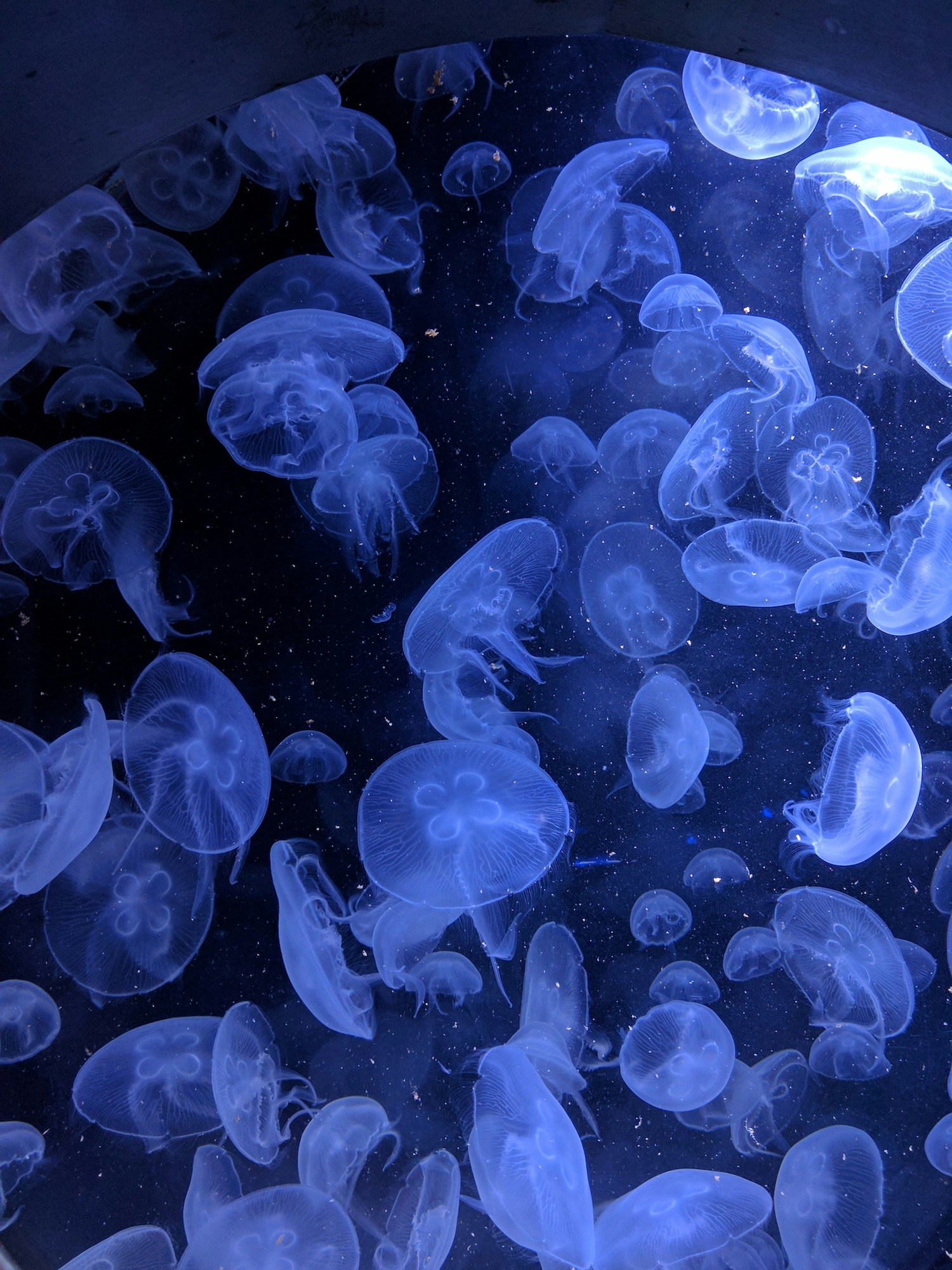
Recent reporting on the Ocean Census offers a striking reminder of how much ocean life remains unknown to humans. In a single year, scientists identified 1,121 previously unknown marine species, drawing on 13 expeditions and nine species-discovery workshops. Together, these discoveries point to a living world that is still only partially visible to us.
Many of the most arresting finds come from deep or difficult-to-reach parts of the ocean: a ghost shark, or chimaera, from the Coral Sea Marine Park; a symbiotic worm living inside the chambers of a glass sponge on a volcanic seamount in Japan; a new sea pen from Antarctic waters; a bright-orange shrimp from underwater caves near Marseilles; and a ribbon worm off Timor-Leste whose toxins may have biomedical significance.
Of course, these beings are newly described, not newly evolved. They have been living their lives all along, far below the reach of ordinary human sight, in cold water, darkness, caves, seamounts and deep reef systems. Scientific discovery does something precise and powerful: it brings a life-form into shared human knowledge. That matters for taxonomy and ecology, as well as for conservation and public imagination.
The scale of what remains unknown is extraordinary. NOAA estimates that between 700,000 and 1,000,000 ocean species are still undiscovered, while as much as 70 per cent of the seafloor remains unmapped. At the same time, ocean life is being documented under growing pressure from warming waters, acidification, overfishing and the prospect of deep-sea mining. The pace of formal species description has historically been slow, with an average lag of around 13.5 years between discovery and publication, which means many organisms can remain in scientific limbo while the systems they inhabit are already being altered.
For us at I Stand Beside, this news lands as both wonder and invitation. Wonder, because every new species expands our sense of the living world. Invitation, because discovery alone is not enough. These creatures need more than classification. They need a human culture capable of attention and deep care. A ghost shark moving through deep water, a worm making its home inside a glass sponge, a shrimp in a submerged cave: these are part of Earth’s living community, however rarely we encounter them.
Who will stand beside deep-sea creatures, discovered and yet to be discovered?
Reading
Coley, and Woodall (2025) Revitalising Marine Taxonomy: Capacity Building and Innovation through the Ocean Census
Gregg (2026) Ocean Census project discovers 1,121 new species of ocean life around the world in one year (ABC News)
Márquez (2026) Scientists Discover Over 1,000 New Ocean Species In Landmark Deep Sea Exploration (Forbes)
Ocean Census, Over 1,100 New Marine Species Discovered
Photo by Praveen Thotagamuwa on Unsplash