Interspecies Assemblies
In April and May this year, rivers, nettles, herons, foxes, poplar, water violet, and many, many other more-than-human neighbours (including E. coli!) gathered through the voices, bodies, masks, and imaginations of human participants for two Interspecies Assemblies (a modified version of the Council of All Beings of the Work That Reconnects) at the wonderful venues […]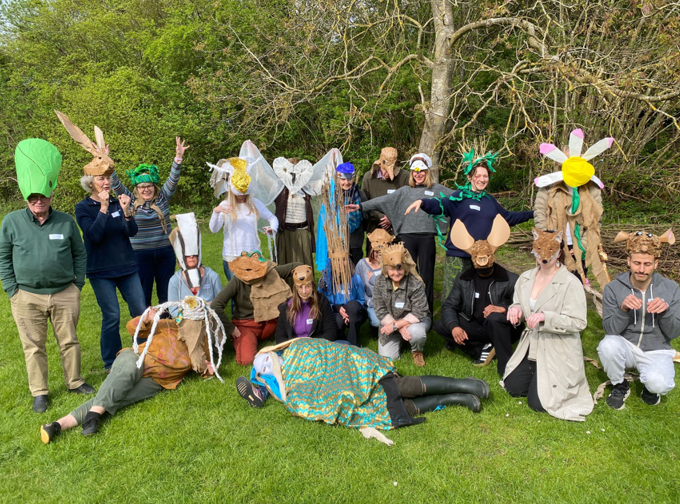
In April and May this year, rivers, nettles, herons, foxes, poplar, water violet, and many, many other more-than-human neighbours (including E. coli!) gathered through the voices, bodies, masks, and imaginations of human participants for two Interspecies Assemblies (a modified version of the Council of All Beings of the Work That Reconnects) at the wonderful venues of Hill End Outdoor Education Centre and Hogacre Common Ecopark in west Oxford. Hosted as part of our research project exploring how humans might better listen to and represent nonhuman life in the public realm, the Assemblies brought together artists, activists, researchers, conservationists, and curious members of the public to spend a day speaking and listening from the perspectives of nonhuman beings living in west Oxford’s floodplain–woodland mosaic. Participants reported that these experiences of ‘becoming-with’ these local nonhuman beings for a day had a lasting impression, including stronger feelings of ecological belonging, deeper connections with specific species seen in their everyday, inspired creativity (one participant even created a whole piece of music from their experience!), and new ways of seeing and relating to the more-than-human world.
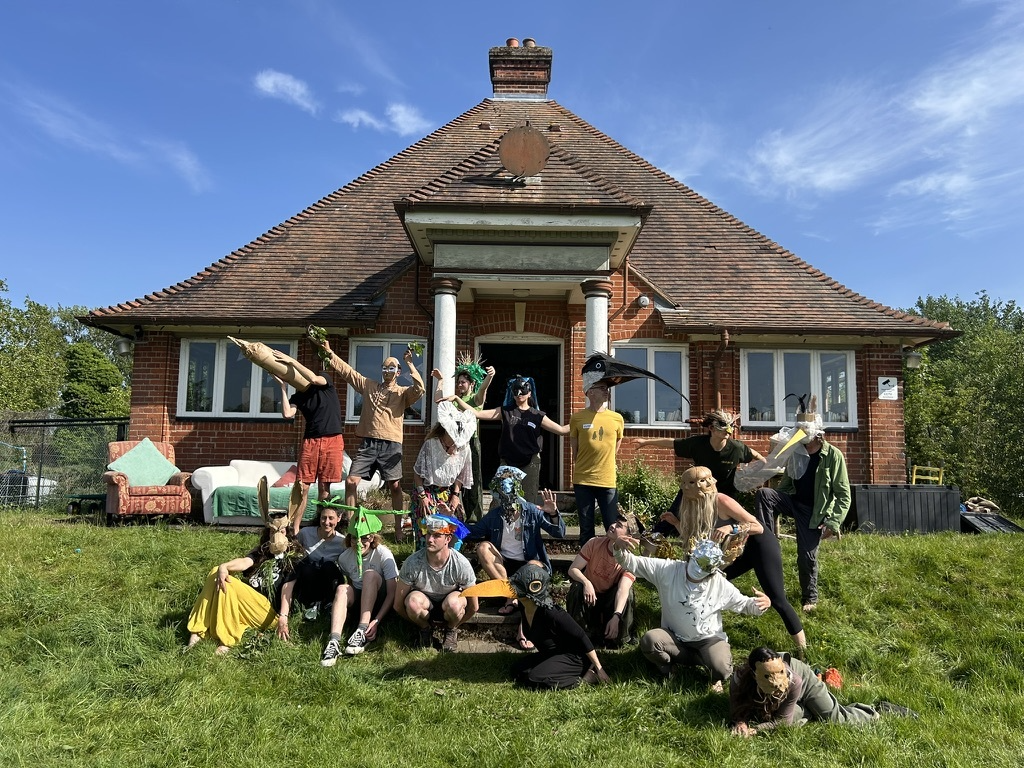
The incredible data we collected is now being analysed and written up in an academic paper, which explores many fascinating questions, including: what kind of change do practices like these actually produce? While participants often questioned whether such ‘transformative’ experiences translate directly into policy or activism, many described enduring shifts in attention, empathy, imagination, and relationship. The emerging findings suggest that such creative practices as Interspecies Assemblies may be less about making decisions and more about cultivating the capacities needed to make good decisions, from a place of courage, curiosity, and love. From here, wider social and ecological transformation might grow. Watch this space for the full paper (and perhaps a few more Assemblies involving unusually articulate aphids)! (