Small wonders: the overlooked beings our members stand beside
Some of our early adopters chose beings that most people never notice, or step over without knowing. Here are a few of them, and why they deserve a closer look. Ask people to name a being they love and most will think of something with fur or feathers. Many of our early adopters did. But […]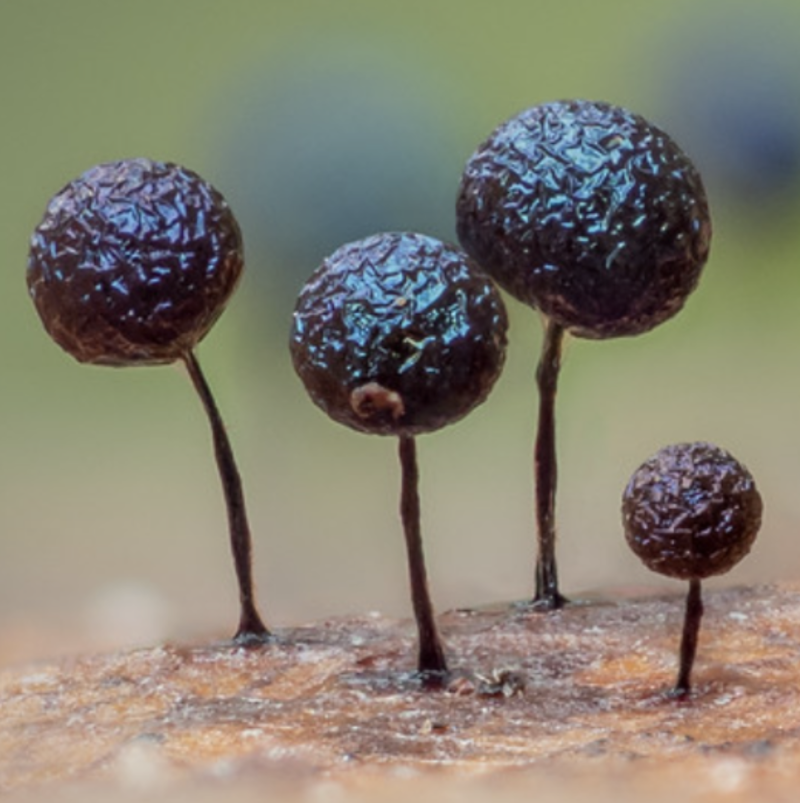
Some of our early adopters chose beings that most people never notice, or step over without knowing. Here are a few of them, and why they deserve a closer look.
Ask people to name a being they love and most will think of something with fur or feathers. Many of our early adopters did. But a surprising number went the other way, choosing beings that are tiny, hidden underground or under water, or simply easy to overlook. Here is a short field guide to some of them.
Tardigrades. Two members stand beside these “water bears”, eight-legged animals usually less than a millimetre long that live in films of water on moss and lichen. When their home dries out, they dry out too, curling into a dormant state called a tun, and they can revive when water returns. In 2007, dried tardigrades were sent into orbit and exposed to the vacuum of space. They survived, and some went on to lay eggs that hatched. One member’s verdict was simply that they are “really cool”.
Slime moulds. Slime moulds are neither plants, animals nor fungi. For part of their lives they move as a single creeping mass, searching for food. In one well-known experiment, a slime mould spreading between oat flakes laid out like the cities around Tokyo built a network of tubes as efficient as the region’s railway. Jonathon Porritt stands beside Lamproderma scintillans, a slime mould whose name means “sparkling”, and offered William Blake his apologies: “To see a world in a slimy mould”.
A fungus beneath almost everything. Merlin Sheldrake stands beside Rhizophagus irregularis, an arbuscular mycorrhizal fungus. Fungi of this kind live inside the roots of most land plants, trading water and minerals for sugars, and this species, he writes, “has taught us so much about what happens underground”.
Lichens. A lichen is a partnership, at the very least between a fungus and an alga or a cyanobacterium. Richard Powers stands “beside, beneath, behind, in front, around, in awe of” all of them. Other members chose particular kinds: pixie cup lichens, chosen by a member in Tasmania, and a red-tipped Cladonia on the dunes and heaths of Moray.
Green shield-moss. For most of the year this moss is all but invisible. What you might see, in autumn and winter, are its small green capsules rising from rotting logs. In Britain it has only ever been found at a handful of sites in Scotland, and it is listed as Endangered. One member stands beside it in a glen near her home, where a community trust helps to look after its habitat.
Earthworms. Two members chose earthworms, one as “unsung heroes of the often overlooked world beneath our feet”. Charles Darwin thought them important enough to devote his last book to them. Another member has borrowed their pace for an idea she calls Worm Time: a period of creative rest in which to compost thoughts and turn over new ideas.
The medicinal leech. One member wrote her profile in the leech’s own voice: “I am not fluffy and huggable.” Britain’s largest leech now survives in only around twenty scattered populations, is protected by law and is listed as Near Threatened. Its bite carries both an anaesthetic and an anticoagulant, so it is painless, which is perhaps not much consolation.
Maerl. Maerl looks like coral but is a red seaweed with a hard, chalky skeleton. Where it gathers on the seabed it forms beds that shelter a great many other species. It grows extremely slowly, so beds damaged by dredging take a very long time to recover. An artist on the north-west coast of Scotland stands beside the maerl beds near her studio.
The list goes on: a pond mud snail bred for release by conservationists in Scotland, a hazel gloves fungus that lives on another fungus growing on hazel, the Scottish wood ant, and the Unknown Beings, the many species that will vanish before anyone has recorded them. As one member put it: “Look down, look closely, and share the wonder.”
Standing beside: Countless small beings still have no one standing beside them. Choose one, and tell us why.
Photo: Lamproderma scintillans www.barrywebbimages.co.uk