Celebrating World Bee Day
Today is World Bee Day, a day set aside to honour creatures without whom many landscapes, livelihoods and food systems would unravel. The FAO describes bees and other pollinators as essential to keeping people and the planet healthy, and this year’s theme — Bee together for people and the planet — centres the long relationship […]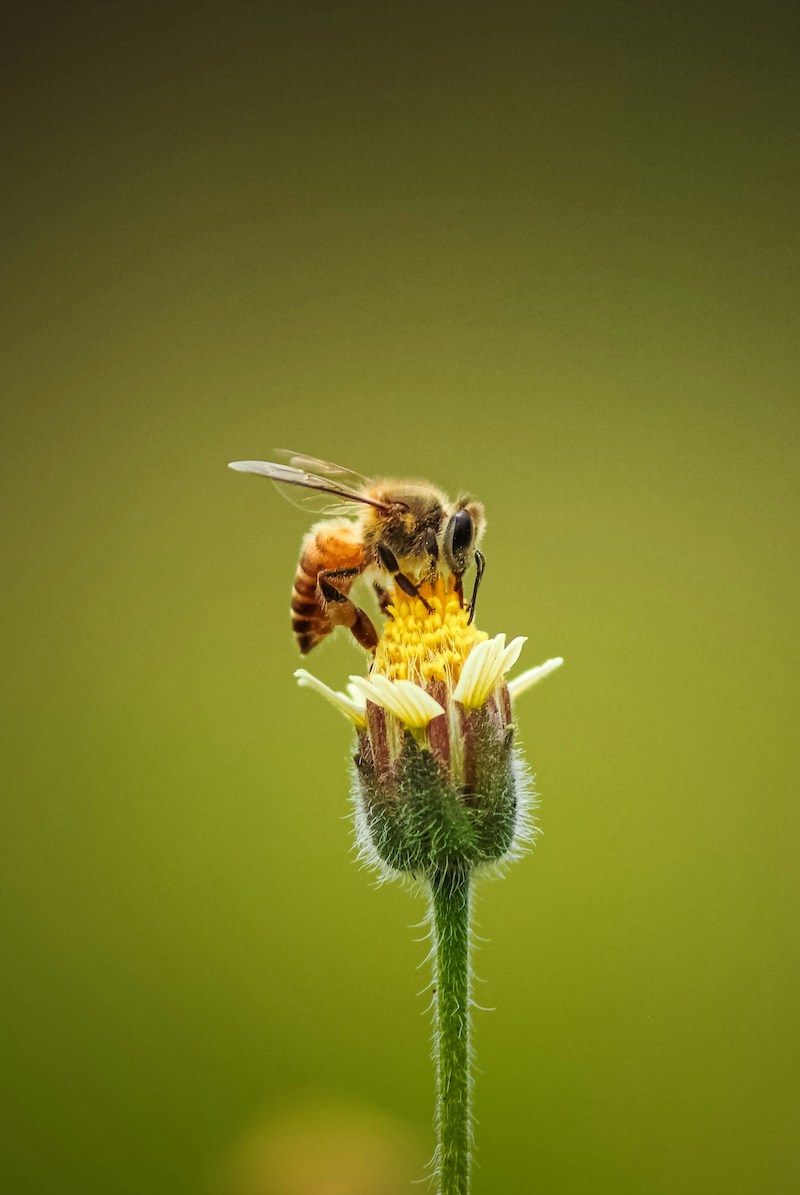
Today is World Bee Day, a day set aside to honour creatures without whom many landscapes, livelihoods and food systems would unravel. The FAO describes bees and other pollinators as essential to keeping people and the planet healthy, and this year’s theme — Bee together for people and the planet — centres the long relationship between human communities and bees across cultures, landscapes and generations.
Most of us in Euro-modern society were taught to notice only one or two bees: the honeybee and the bumblebee. But bees are a vast and varied lineage. More than 25,000 bee species are among the roughly 200,000 animal species that act as pollinators. Pollinators affect 35% of global crop production by volume, and three-quarters of the world’s most productive crop plants depend at least in part on pollinators. More than 80% of flowering plant species are pollinated by animals, mostly insects. That means bees are woven not only into orchards and farms, but into the reproduction of wild plants, the feeding of birds and mammals, the persistence of habitats, and the wider metabolism of our living world.
The science on their importance is now extensive. A landmark 2007 synthesis found that pollinators are important for the vast majority of leading global crop types. In 2013, Garibaldi and colleagues showed in Science that across more than 40 crop systems worldwide, wild pollinators enhanced fruit set more effectively than increases in honeybee visitation alone. In 2018, Winfree et al. showed that crop pollination at regional scales depends on many bee species, including relatively rare ones, because different species matter in different places. And just this month, a Nature paper from Nepal drew a direct line from pollinators to human wellbeing: insect pollinators were responsible for 44% of people’s farming income and more than 20% of vitamin A, folate and vitamin E intake in the communities studied. They are also far more diverse in form and way of life than the hive image suggests. Many bees are solitary. Some nest in the ground, some in stems, timber, walls or old beetle holes. Some are tiny and metallic, some large and furred, some stingless, some active for only a short season, some tightly bound to a handful of flowers. When we say “save the bees”, it is worth remembering that this means saving a whole constellation of beings, each with its own evolutionary history, ecological role and requirements. Bees are not decorative extras in the story of life. They are part of the working structure of ecosystems and, often, of human nutrition too.
Bees have long captured human imagination because they are both intimate and elusive: near at hand, yet belonging to a world of scents, dances, frequencies and floral relations that humans only partly perceive. They appear in very old human symbol systems. In ancient Egypt, the bee formed part of the royal title “He of the Sedge and the Bee.” Virgil’s Georgics includes practical instruction on keeping bees, binding them to one of the foundational poems of agrarian life in the European canon. In modern art, Joseph Beuys made From the Life of the Bees. In modern literature, bees move through Sylvia Plath’s late poems, and Laline Paull’s The Bees imagines a whole world from within the hive. Again and again, bees have been treated as makers, messengers, citizens, and choruses.
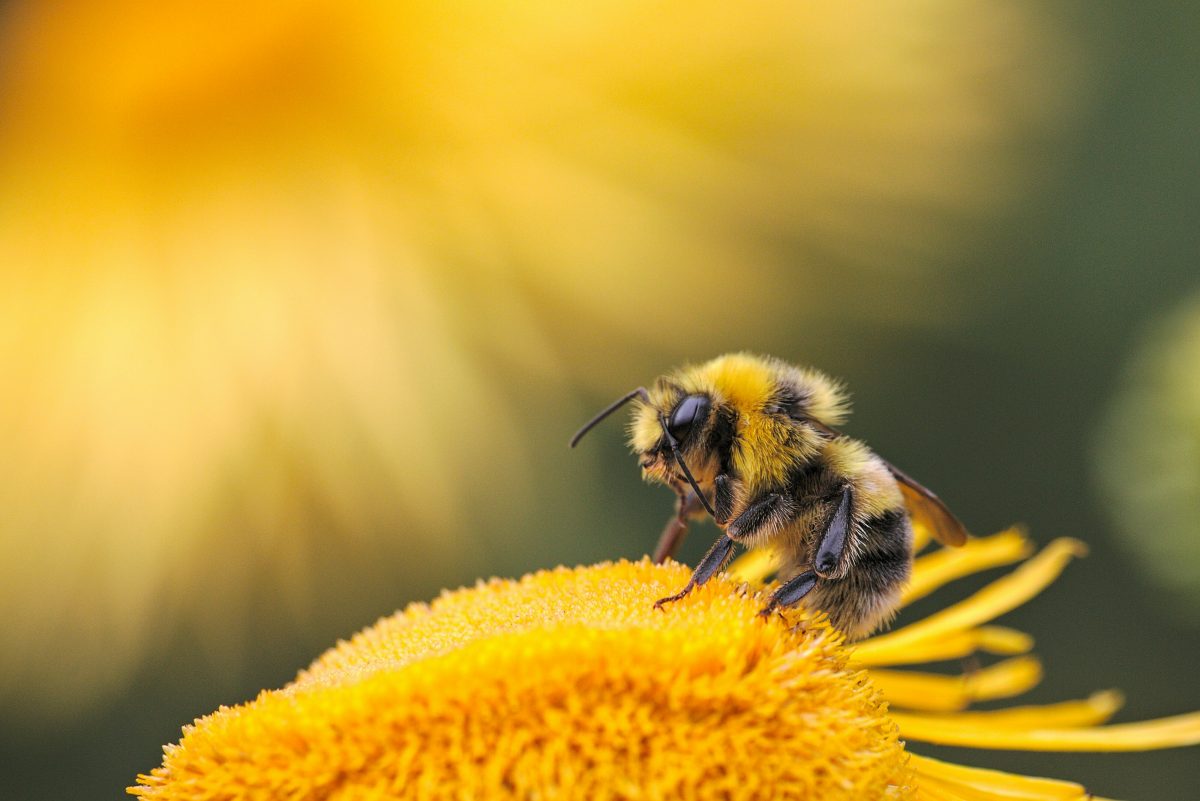
Many Indigenous and local communities have long held detailed, place-based knowledge of bees, honey and pollination. UNESCO notes, for example, that Yanomamï communities have names for 50 kinds of bees that provide honey for food or medicine. ABC reports that First Nations Australians have prized native stingless bee honey for food and medicine for tens of thousands of years. The Orang Rimba of Jambi, Sumatra, are known to “Enchant the Honeybees with Magical Love Songs “, a beautiful reminder that human relations with bees have often involved ritual, respect and song, not only honey extraction!
So, World Bee Day is not just a reminder to worry about loss, though loss is very real. FAO notes that bees, pollinators and many other insects are declining in abundance. Recent scientific reviews point to land-use intensification and pesticide overuse among the key pressures, while broader work links pollinator decline to environmental degradation, poorer nutrition and reduced livelihood security. Protecting bees means protecting nesting places, floral diversity, seasonal continuity, clean water, healthy soils and more careful relationships between agriculture and the rest of life. Ethnographic work on the Orang Rimba of Jambi, Sumatra, has been published under the title Enchanting the Honeybees with Magical Love Songs, a reminder that human relations with bees have often involved ritual, respect and song, not only extraction.
The Threshold by Jo Shapcott
I waited all day for tears and wanted them, but
there weren’t tears. I touched my lashes and
the eyewater was not water but wing and fur
and I was weeping bees. Bees on my face,
in my hair. Bees walking in and out of my
ears. Workers landed on my tongue
and danced their bee dance as their sisters
crowded round for the knowledge. I learned
the language too, those zig-zags, runs and circles,
the whole damned waggle dance catalogue.
So nuanced it is, the geography of nectar,
the astronomy of pollen. Believe me,
through my mouth dusted yellow
with their pollen, I spoke bees, I breathed bees.
Among those in our wider community already standing beside bees are Laline, standing beside the Honey Bee; Angelika and Ola, The Bees; Laura the Unexpected Bumblebee; and Fiona and Chris, both standing beside the Great Yellow Bumblebee (check out our Beings page). So today we all celebrate bees for their beauty, certainly, but also for their labour, intelligence, variety, and their old entanglement with flowers, food and human imagination. We celebrate them as pollinators, as makers of sweetness, as beings who have fed stories and rituals across millennia, and as fellow participants in the great, intricate work of keeping worlds alive.
On World Bee Day, may we become more worthy of them.
Ten Actions to Stand Beside Bees:
Supporting bees does not require a field, a hive, or specialist knowledge. A few practical changes can make a real difference:
(1) Notice which bees already live near you, and let care begin with noticing.
(2) Plant a wide range of nectar- and pollen-rich flowers, with something in bloom from early spring to late autumn.
(3) Choose native plants where possible, since many wild bees are closely tied to local flowering species.
(4) Leave some places a little messy: bare patches of soil, old stems, hedges, and corners of unmown grass can all provide nesting habitat.
(5) Avoid pesticides, especially insecticides and weedkillers that reduce both bee forage and bee survival.
(6) Buy food from farmers who support pollinators through more diverse, less chemically intensive farming.
(7) Put out a shallow dish of water with stones or pebbles so bees can drink safely.
(8) Let lawns flower now and then by mowing less often.
(9) Protect flowering “weeds” such as clover, dandelion and self-heal, which are often important food sources, supporting local action for wildflower verges, healthier parks, fewer pesticides, and more habitat in schools, churches, farms and public spaces.
(10) Learn the difference between honeybees, bumblebees and solitary bees, so that “helping bees” includes the full diversity of bee life, not just hives.
- FAO, World Bee Day 2026.
- FAO, Global Action on Pollination Services for Sustainable Agriculture.
- Klein et al. (2007), Importance of pollinators in changing landscapes for world crops.
- Garibaldi et al. (2013), Wild pollinators enhance fruit set of crops regardless of honey bee abundance.
- Winfree et al. (2018), Species turnover promotes the importance of bee diversity for crop pollination at regional scales.
- Timberlake et al. (2026), Pollinators support the nutrition and income of vulnerable communities.
- Met Museum, ancient Egyptian royal title “He of the Sedge and the Bee”.
- Tate on Joseph Beuys, From the Life of the Bees.
- Sylvia Plath’s bee poems.
- UNESCO and ABC on Indigenous knowledge and relations with bees.
- Asian Ethnology / JSTOR on Orang Rimba honey-collecting songs.
Photos by Ankith Choudhary and Dmitry Grigoriev on Unsplash